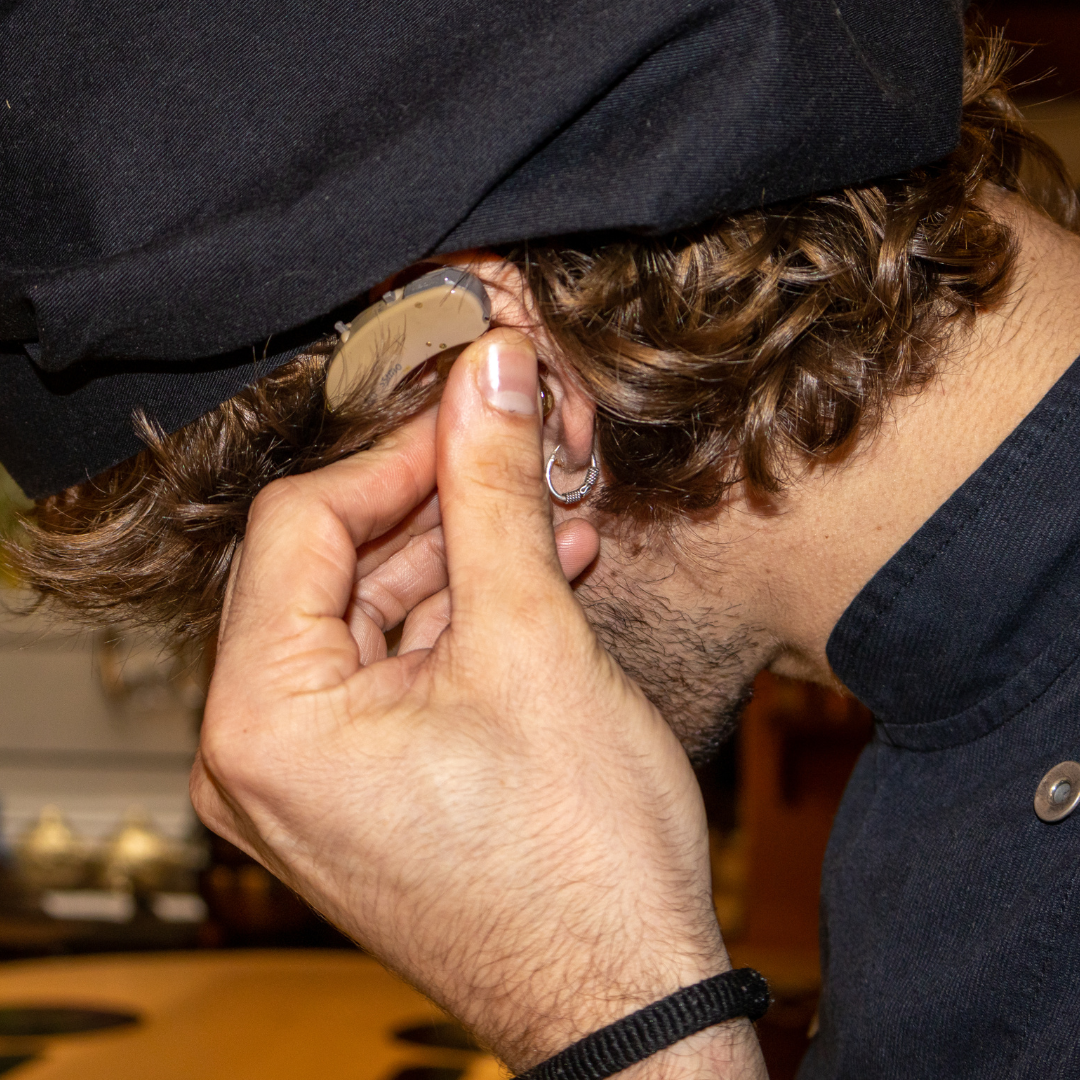
Active restaurant conversations are frequently hard to decipher when surrounding background noise clashes with your hearing. Our audiology clinic conducts specialized testing to evaluate hearing in both quiet sound booths and noisy simulations to isolate the underlying cause. After diagnosing the source of your difficult hearing, we design targeted interventions tailored to your listening needs.
Why Do I Hear Well in Quiet but Struggle in Restaurants?
Low-noise environments yield an advantageous signal-to-noise ratio where primary speech remains significantly louder than background sound. Dining rooms present an unfavorable acoustic reversal of this dynamic. Layered diner voices, kitchen activity, foreground music, and room reverberation muddy speech signals, requiring intense mental strain to follow dialogue.
This symptom pattern often reflects underlying high-frequency hearing loss, central processing dysfunction, or physiological aging of the auditory nerve. Attention, fatigue, dim lighting, and distance from the speaker may make it worse. Some people have normal results on a basic hearing test but still perform poorly on speech-in-noise testing. Experiencing speech-recognition struggles in noisy dining venues warrants a formal audiological evaluation regardless of seemingly normal quiet hearing.
Diagnostic Protocols for High-Frequency Hearing Loss
We initiate evaluation by exploring challenging acoustic environments, acoustic trauma history, subjective tinnitus, prescription drug profiles, and unilateral ear changes.
Pure-tone audiometry measures the softest sounds you can hear at different pitches through air and bone conduction. A clinical presentation of high-frequency loss produces a downward-sloping audiogram where auditory thresholds worsen significantly at higher frequencies. Diagnostic evaluations may also integrate acoustic tympanometry to check middle-ear pressure alongside word-recognition testing to evaluate speech processing.
Because a quiet booth does not recreate a busy dining room, speech-in-noise testing can add valuable information. It evaluates sentence-level speech comprehension as competing background babble increases in volume. Collectively, these evaluations clarify if your challenges relate to raw audibility, phonetic clarity, signal-to-noise processing, or compound factors.
How Auditory Processing Difficulties Impact Adult Hearing
An auditory processing disorder affects how the central auditory nervous system interprets sound. The physical ear mechanisms may capture tones correctly, but the central brain pathways struggle to filter competing inputs, parse similar consonants, or interpret rapid speech. We first evaluate peripheral hearing and then determine whether an individualized auditory-processing test battery or referrals to other professionals are appropriate.
Actionable Listening Tips for Noisy Social Settings
Small changes can improve the signal reaching your ears and provide clearer visual cues. Prior to dining, choose venues known for lower noise levels or schedule meals during quieter dining hours. Dining locations utilizing sound-absorbing elements like booths, felt panels, window curtains, and carpet offer better acoustics than high-ceilinged rooms with hard surfaces.
In-venue communication guidelines:
- Ask host staff for a quiet table distanced from kitchen traffic, bar noise, audio speakers, and loud group tables.
- Situate yourself with a structural wall behind you to minimize distracting ambient noise from behind.
- Face your conversation partners in good lighting.
- Keep the distance between speakers as short as comfortably possible.
- Orient your stronger ear toward the key person you want to follow in conversation.
- Ask the speaker to rephrase the missed portion instead of repeating everything.
- Clarify critical details explicitly instead of nodding along or pretending to catch the message.
- Allow yourself a short listening respite when auditory concentration starts to feel drained.
- Ask dinner guests to speak with clear enunciation at a steady, natural conversational rate.
- Yelling distorts natural speech formants and rarely makes spoken words easier to decipher.
Assistive Listening Technologies for Noisy Environments
Optimal technological solutions depend entirely on the etiology of your symptoms, target acoustic spaces, and whether measurable hearing loss exists. Modern clinical hearing aids integrate directional microphone polar patterns, automated digital noise suppression, and personalized restaurant memory settings to highlight frontal speech and reduce background competition. They still require realistic expectations because no device can remove every unwanted voice.
Wireless remote microphones provide the most effective enhancement to real-world signal-to-noise ratios. Positioned near or clipped to the speaker, the device transmits raw speech audio directly to paired hearing aids or external listening receivers. This targeted setup effectively neutralizes the negative impacts of room distance and interfering background noise.
Supplementary auditory solutions include:
- Omnidirectional table microphones designed for group dining tables
- Built-in telecoils linking directly with induction hearing-loop systems in public venues
- Mobile device live-captioning programs and speech-to-text transcription software
- Modern wireless hearables delivering directional beamforming and sound enhancement
- Decibel-level applications and restaurant rating guides for finding quiet tables
We can compare options, confirm compatibility, and teach you how to use the selected device.
How Medical and Audiology Specialists Resolve Hearing in Noise
Undergoing a formal hearing evaluation takes your care beyond the limited baseline of hearing adequately in quiet spaces. Our clinicians review the specific environments, vocal pitches, and decibel levels that trigger breakdowns to design a personalized test protocol. The assessment may include pure-tone thresholds, middle-ear testing, word recognition, and speech-in-noise measures. Diagnostic auditory-processing testing may be recommended if your clinical symptoms and baseline evaluations suggest central auditory dysfunction.
Sudden unilateral hearing drops, acute asymmetric changes, or rapid auditory decline mandate evaluation by an ear, nose, and throat physician. Dedicated individualized care pinpoints the underlying auditory cause rather than dismissing your struggles as standard restaurant noise.
Book Your Comprehensive Hearing Evaluation Now
If dining in loud spaces leaves you feeling isolated, fatigued, or guessing at missed speech, contact us to schedule a thorough hearing evaluation. Our specialists can introduce effective interventions to support your hearing in noisy environments via precision hearing aid fittings, assistive devices, or audiological rehabilitation.
Connect with us today to arrange your clinical visit and take the first step toward clearer, easier dining communication.