Tinnitus Treatment in Edina, Duluth and Forest Lake, MN
How Do You Treat Tinnitus?
We offer a variety of options for a person with bothersome tinnitus, focusing on results-based treatments based on comprehensive academic studies. There are two main therapies we use: Tinnitus Retraining Therapy and Lenire Tinnitus Technology.
If your tinnitus is particularly troublesome, you will be introduced to a structured method of managing your tinnitus with our team of experts.
Tinnitus Retraining Therapy
Our audiologists at the Tinnitus and Hyperacusis Clinic have been trained by Dr. Pawel Jastreboff in Tinnitus Retraining Therapy and follow the principals, protocols and treatment guidelines.
This method uses a combination of low level, broadband noise and counseling to achieve the habituation of tinnitus (ringing or sound in the ears). This treatment allows the patient to no longer be aware of their tinnitus, except when they focus their attention on it, and even then, tinnitus is not annoying or bothersome.
The brain and nervous system can learn to ignore sounds and other types of sensations when there is no negative emotional attachment. For example, people typically don’t actively listen to air conditioners or other continuous background sounds. These sounds are simply a part of the environment and are easily ignored. Successful habituation to tinnitus is achieved when tinnitus no longer bothers you.
How Does Lenire Work?
Lenire uses a technology called non-invasive bimodal neuromodulation to help retrain your brain to ignore the ringing, whooshing, and buzzing caused by tinnitus. During treatment, you will place a small device on your tongue and wear the headphones. Unique sound patterns are played through the headphones and safe electrical pulses are delivered through your tongue to activate the auditory nerves to your brain. Together, these signals activate the auditory, attention, and emotion centers of your brain. Over time (12 weeks or so), your brain is retrained to ignore the symptoms of tinnitus and give you relief.
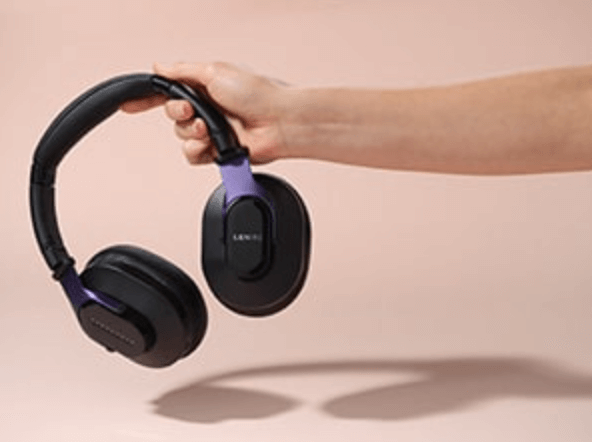
Headphones
These Bluetooth headphones use custom sounds to activate the auditory nerve in your brain.
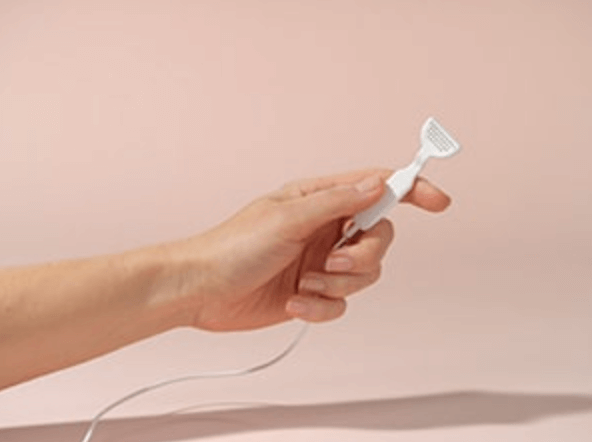
Tonguetip
The Tonguetip is a small device that delivers gentle, painless electrical pulses to the surface of the tongue.
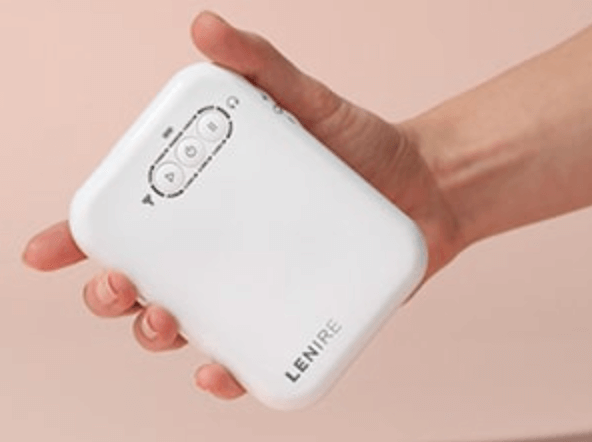
Controller
Each Lenire comes with a lightweight, handheld device to control the timing and intensity of your treatment session.
Why Don’t I Just Buy a Sound Machine to Mask My Tinnitus?
To combat their tinnitus, a lot of people buy a sound machine or app and use it to ‘mask’ or cover up their tinnitus symptoms. Although they provide relief in the short term, specialized professionals know that masking is not an effective long-term treatment of tinnitus for several reasons.
If you consistently cover up your tinnitus, your brain will never be able to perceive it, which creates a dependency for the masking sound. The treatments we choose to work with, such as TRT, involve both directive counseling and sound enrichment therapy to habituate the tinnitus so that it is a “non-issue” in a person’s life.